Article
Sep 15, 2026
Gas Station Security Cameras: Features That Matter Most
Clear video, night vision, license plate recognition, AI analytics and live alerts: the gas station security camera features that matter most.
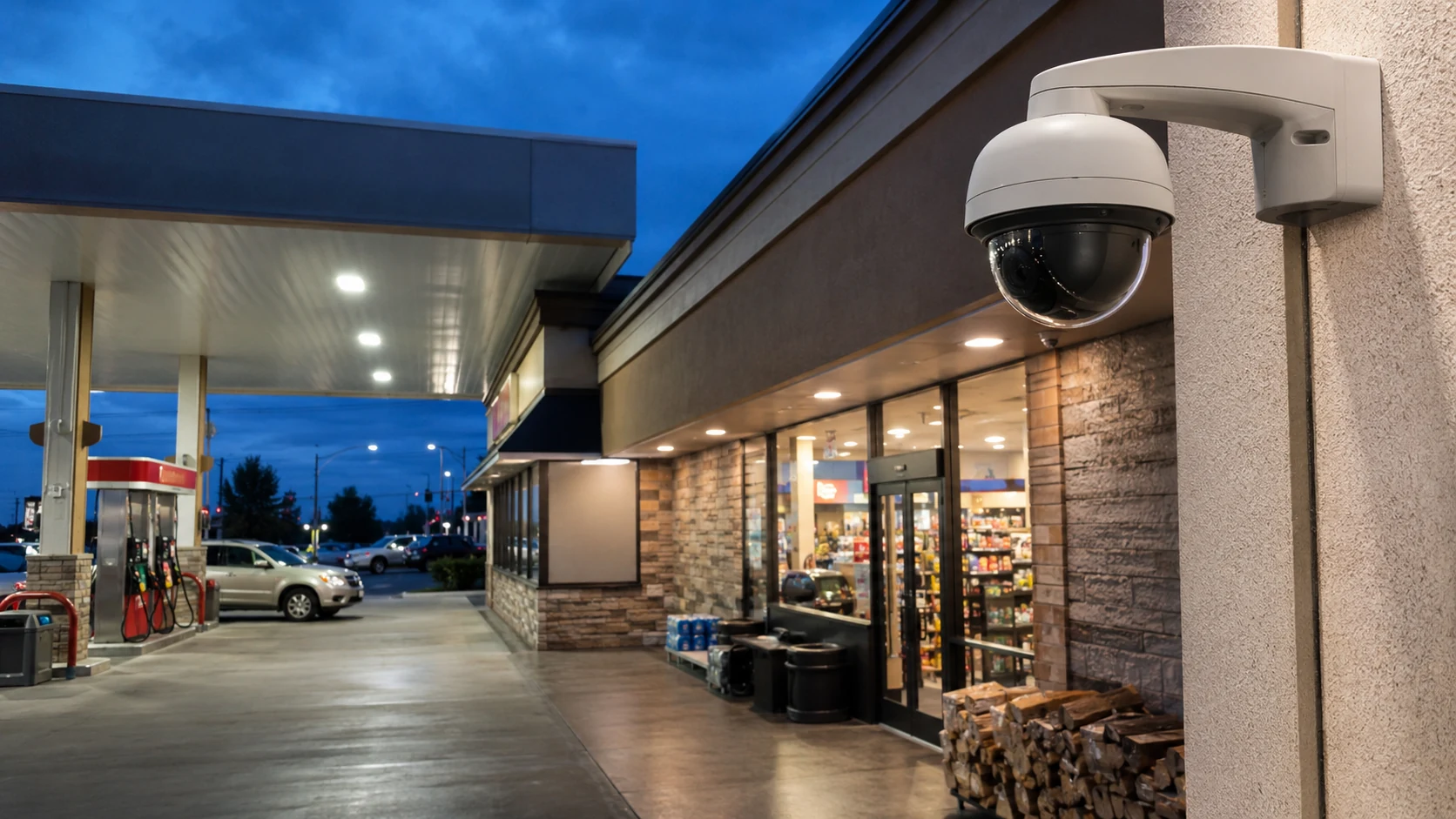
Gas stations have unique security problems that do not affect ordinary retail outlets. Gas stations operate for long hours; they cover large areas outdoors, with many entry and exit points; they deal with money and fuel transfers. In some cases, they may have convenience stores in addition to the gas station area.
That makes choosing the right gas station security cameras more important than simply installing cameras wherever there is an available mounting point.
Here are the features that matter most when evaluating a gas station surveillance system.
1. Clear Video Quality
Having clear recordings is among the fundamental conditions for ensuring security at gas stations. The video feed must be able to give the viewer the ability to recognize individuals, cars, transactions and activities around the premises. It is possible that low quality recordings will only confirm that something has happened.
High-resolution cameras may be especially significant near fuel pumps, entry/exit gates, registers, and parking lots.
2. Strong Coverage Around Fuel Pumps
The fuel pump is one of the critical places that need to be monitored. The gas station could have many fuel pumps in an expansive outdoor setting, making it hard for the staff working in the station to keep track of all the cars.
Cameras need to ensure visibility of pump aisles, payment areas, and surroundings without creating any unnecessary blind spots. The camera coverage needs to be re-evaluated each time when new pumps or signs and other outdoor facilities are installed.
3. Night Vision and Low-Light Performance
Since gas stations tend to stay open late into the night, cameras have to work effectively in low-light situations. If a camera fails to deliver good video images when it is dark, then a huge security loophole is created.
Night vision, infra-red facilities, correct lighting, and wide dynamic range could be beneficial for camera operation in changing lighting situations. It is very important near the fuel pumps and in parking lots, where people are still active despite low light conditions outside.
4. License Plate Recognition
Vehicles are central to gas station activity, making license plate recognition a valuable feature for certain locations.License plate technology can help businesses capture and review vehicle information when appropriate. This may be useful when investigating incidents involving fuel theft, drive-offs, suspicious vehicles, or other security events.
The usefulness of this feature depends on camera placement, lighting, vehicle speed, and local privacy and legal requirements.
5. AI-Powered Video Analytics
Traditional CCTV records video, but someone generally needs to watch the footage or review it later. Modern AI video surveillance can analyze video feeds and identify events based on predefined rules. Depending on the system, analytics may help identify unusual activity, movement in restricted areas, after-hours activity, or other events that deserve attention.
This can be particularly useful at gas stations because employees are often focused on customers, fuel transactions, and store operations.
6. Real-Time Alerts
The functionality of the security system improves when it is able to provide alerts to important events. The alerts provided in real-time will inform the authorized staff and security monitors when the predefined event takes place. This can include movement in a restricted area or any other security-related issue.
The benefit is not simply the increase in notifications that one gets. Too many unneeded alerts may cause alert fatigue.
7. 24/7 Monitoring
Gas stations don’t end their operations after working hours; security personnel shouldn’t as well.
24/7 security monitoring can provide an additional layer of oversight during periods when on-site staff are limited.
Through AI-powered solutions, cameras can constantly monitor actions, with personnel reviewing alerts that need attention. This way, companies can stay aware without having someone watching all the cameras throughout the day.
8. Coverage of the Convenience Store
Most gas stations have attached convenience stores as well, so surveillance requirements cannot just be limited to the pumps.
Cameras should cover areas such as:
Entrances and exits
Checkout counters
High-value merchandise
Refrigerated sections
Storage areas
Parking and exterior areas
Linking up all these zones under a single surveillance system could make it easier to investigate incidents and determine what occurred prior to, during, and after the incident.
9. POS and Transaction Integration
Gas station security does not necessarily mean only physical theft. Other unusual activities like refunds, voids, or anything else involving the register may need investigation.
With the integration of video surveillance systems with point of sale systems, businesses can match transaction details with the related videos. An anomaly in the transaction time stamp would assist in locating the right video without having to search through many hours of videos.
10. Remote Access
The owners and operators of gas stations may be responsible for managing many different sites or only have the time to manage a few. Remote access enables those who are authorized to monitor cameras and security incidents from anywhere.
This will especially come in handy to companies running several gas stations since the management can keep track of everything from one place. Access must always be secured using proper authorization.
11. Human Verification
AI is able to detect potential events of significance, but the role of human intervention is still important.A machine will be able to detect that there is something strange going on, but a person monitoring the situation can assess the event and find out if it is actually a problem of security significance.
12. Scalable Security Infrastructure
The need for security at a gas station may vary.
Businesses can install pumps, expand their convenience stores, create new entrances, and even establish new businesses. The surveillance system must be versatile enough to accommodate these changes.
This means that such systems can be upgraded by adding cameras, analytics, or monitoring features without needing to rebuild the security framework again from the start.
What Should Gas Station Owners Prioritize?
Every gas station does not necessarily require all the advanced facilities; it is the correct combination that should be chosen depending on various aspects.
At a minimum, businesses should look for:
Clear video quality
Reliable night performance
Strong pump and entrance coverage
Minimal blind spots
Real-time alerts
Remote access
AI analytics where appropriate
Integration with POS systems when useful
Human verification for important alerts
The aim is to construct a system that enables real security processes to occur, as opposed to merely generating video footage.
Final Thoughts
The best gas station security cameras do more than capture images. They provide visibility across fuel pumps, stores, entrances, parking areas, and other critical locations while helping security teams identify important events.
AI-based analytic capabilities, license plate detection, real-time notification, point-of-sale integration, and round-the-clock surveillance systems can transform regular CCTV installations into a proactive security system.
For gas station owners who want to go above and beyond the limitations of simple video surveillance, Survill can be the solution by combining AI-based surveillance with real-time surveillance and human intervention.