Article
Oct 2, 2026
How Much Does Shrink Really Cost a Convenience Store?
Shoplifting, employee theft and errors quietly add up. See how much shrink really costs a convenience store each year and where those losses come from.
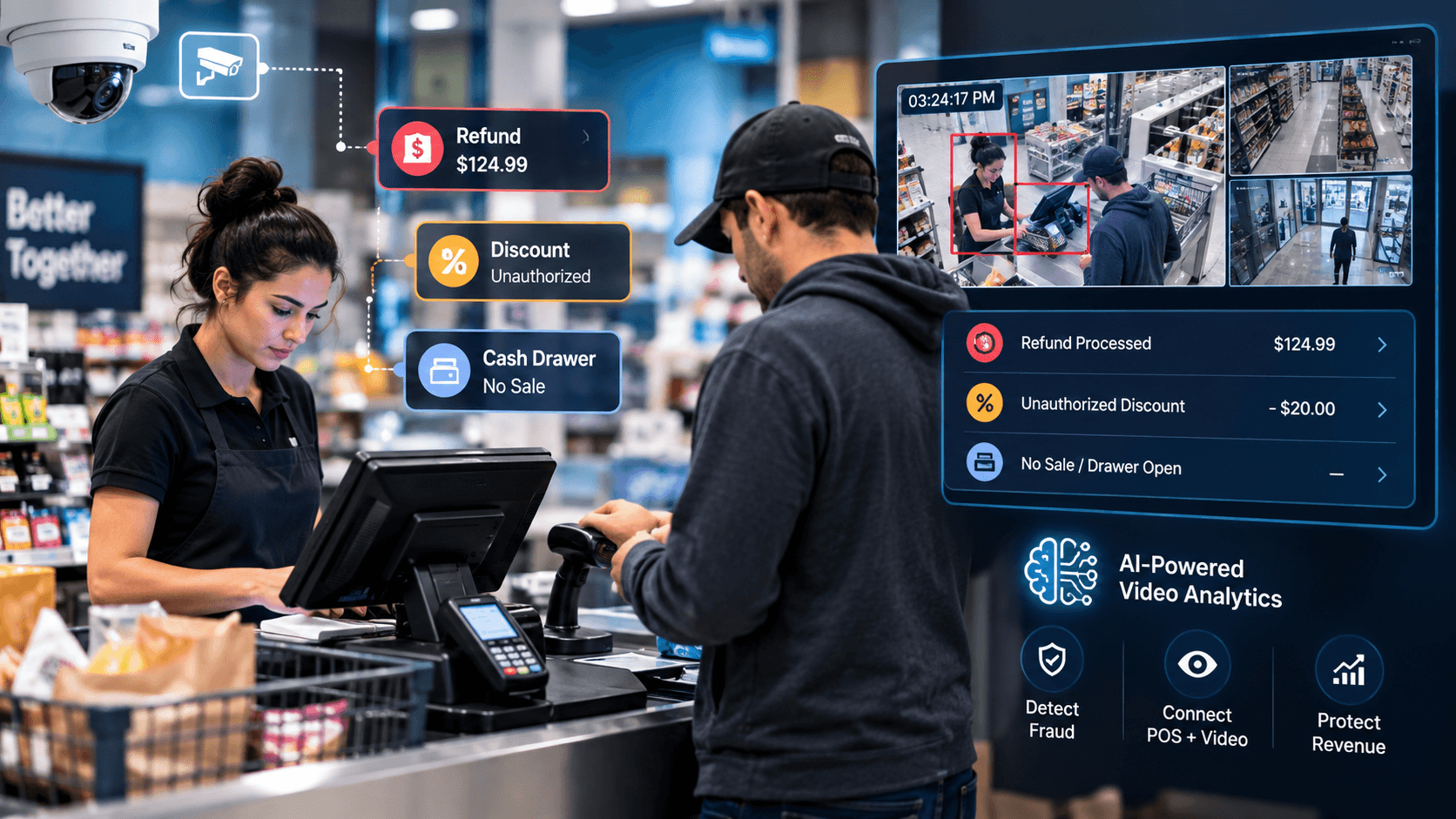
Shrink is one of the hidden costs that can quietly reduce a convenience store’s profitability. A missing product may seem insignificant, and a small cash shortage may not raise immediate concern. But when these losses happen repeatedly across hundreds of transactions and operating days, they can add up to thousands of dollars each year.
For U.S. convenience stores, shrink can come from shoplifting, employee theft, sweethearting, cash discrepancies, refund abuse, inventory errors, vendor issues, and POS manipulation. The difficult part is determining where the losses are happening and what is causing them.
Understanding the real cost of convenience store shrink can help owners and operators create better loss prevention strategies and protect more of their revenue.
What Is Shrink in a Convenience Store?
Shrink is the difference between the inventory a store's records indicate it should have and the inventory that is actually available.
For example, if a convenience store's inventory system shows 200 units of a product but a physical count finds only 194, there is a six-unit discrepancy.
That difference may result from theft, damaged products, counting mistakes, receiving errors, expired merchandise, or unrecorded sales.
Common causes of shrink include:
Customer shoplifting
Employee theft
Sweethearting
Cash shortages
Unauthorized discounts
Refund fraud
Voided transactions
Inventory errors
Vendor discrepancies
Unrecorded product loss
Because shrink has multiple causes, businesses need more than a simple inventory count to understand the problem.
How Much Can Shrink Cost a Convenience Store?
The financial impact depends on the store's size, sales volume, product mix, location, employee activity, and existing loss prevention controls.
Consider a simple example.
If a convenience store experiences an average of $100 in preventable losses every week, that equals about $5,200 per year.
At $250 per week, the annual loss becomes approximately $13,000.
At $500 per week, the store could lose around $26,000 per year.
These numbers represent direct losses only. The actual business impact can be higher when management considers the time spent investigating incidents, reconciling inventory, reviewing video, handling employee issues, and correcting operational problems.
For a convenience store chain with several locations, even relatively small losses at each store can become a significant company-wide expense.
The Real Cost Goes Beyond Missing Merchandise
Shrink is often measured by the value of missing inventory, but that does not capture the entire financial impact.
Merchandise Loss
Products that leave the store without generating legitimate revenue directly reduce potential profit.
Common high-risk convenience store merchandise can include:
Tobacco products
Alcohol
Snacks
Beverages
Personal care items
Electronics accessories
Other small, high-demand products
When these losses occur repeatedly, the financial impact becomes much more noticeable.
Cash Loss
Cash handling creates another potential source of shrink.
Register shortages can result from theft, incorrect change, transaction errors, unauthorized refunds, discounts, or other forms of POS misuse.
A small discrepancy occurring repeatedly can become a substantial annual loss.
Employee Theft
Employees have legitimate access to merchandise, registers, and POS systems, which can make certain types of internal theft difficult to detect.
Potential examples include processing false refunds, giving unauthorized discounts, failing to scan products, voiding transactions, or taking cash.
Businesses should not assume that an unusual transaction automatically means theft. Instead, recurring patterns should be reviewed and investigated appropriately.
Sweethearting Can Create Hidden Losses
Sweethearting occurs when an employee provides unauthorized discounts or merchandise to a friend, family member, or another customer.
For example, an employee might scan only some items in a customer's purchase while allowing other products to leave the store without payment.
The POS system may record a legitimate transaction, but the business still loses merchandise.
This is one reason transaction data and physical activity need to be considered together.
Why POS Data Alone Is Not Enough
A POS system can show what happened inside the transaction system, but it may not explain what happened at the register.
A report may show that an employee processed a $100 refund at 8:15 PM. However, the report may not answer:
Was a customer present?
Was merchandise actually returned?
Did the employee inspect the item?
Was the correct procedure followed?
Was cash involved?
Did another person participate?
These questions are important when investigating potential losses.
Connect POS Transactions With Video
POS-integrated surveillance can provide additional context by connecting transaction events with corresponding video footage.
For example:
POS event: $100 refund at 8:15 PM
Video: Checkout activity at 8:15 PM
Review: Customer interaction, product handling, employee activity, and register behavior
Instead of searching through hours of recordings, managers or loss prevention teams can focus on the footage associated with a specific transaction.
This can make investigations faster and provide more useful evidence when a transaction requires review.
Monitor High-Risk Transactions
Convenience stores can establish monitoring procedures around transaction types that may create greater opportunities for loss.
These can include:
Refunds
Voids
Discounts
No-sale register openings
Price overrides
Cash transactions
Unusual transaction patterns
One event may have a completely legitimate explanation. However, repeated activity involving the same employee, register, shift, or location can provide a reason for additional investigation.
Use AI to Identify Suspicious Activity
Convenience stores operate throughout the day, and managers cannot realistically watch every camera continuously.
AI-powered video analytics can help businesses identify events that deserve attention and reduce the amount of footage employees need to review manually.
Depending on the monitoring system, businesses can use analytics to help identify activity involving checkout transactions, register behavior, suspicious movement, after-hours activity, and other predefined events.
AI should not automatically determine that an employee or customer committed fraud. Human verification remains important because unusual activity can have legitimate explanations.
The goal is to help businesses find relevant events faster.
Measure Shrink by Location, Employee, and Transaction
Convenience store operators can learn more about their losses by breaking shrink data into smaller categories.
Businesses can compare:
Store location
Employee
Register
Shift
Product category
Refund frequency
Void frequency
Discount activity
Cash discrepancies
For example, if one location consistently has higher inventory discrepancies than comparable stores, management can investigate the reasons.
Similarly, unusually frequent refunds or no-sale transactions during a particular shift may justify closer review.
How Convenience Stores Can Reduce Shrink
A practical loss prevention strategy can combine several controls:
Conduct regular inventory counts
Train employees on refund and cash-handling procedures
Limit unauthorized POS permissions
Monitor refunds, voids, and discounts
Review cash discrepancies
Track high-risk products
Connect POS activity with video
Use AI-powered monitoring where appropriate
Review recurring transaction patterns
Centralize monitoring across multiple locations
The objective is not simply to install cameras. It is to create visibility across transactions, inventory, employees, customers, and store activity.
How Survill Helps Convenience Stores Reduce Shrink
Survill combines AI-powered video monitoring, POS intelligence, and human verification to help businesses improve visibility into activity that may contribute to losses.
For convenience stores, this can provide additional visibility around checkout areas where refunds, discounts, voids, cash transactions, and product handling occur.
By connecting POS events with relevant video footage, businesses can investigate specific transactions without manually reviewing hours of unrelated recordings.
For operators with multiple convenience store locations, centralized monitoring can also help teams identify incidents and review activity across different stores more efficiently.
Conclusion
The cost of shrink in a convenience store is more than the value of a few missing products. Shoplifting, employee theft, sweethearting, cash shortages, refund abuse, inventory discrepancies, and POS manipulation can collectively create significant losses over time.
The first step is understanding where those losses are occurring. Regular inventory checks, POS analysis, employee training, transaction monitoring, and video surveillance can help businesses identify recurring problems.
For U.S. convenience store operators, combining transaction intelligence with AI-powered video monitoring can provide greater visibility into what happens at the register and throughout the store.
Survill helps businesses strengthen this approach through AI-powered monitoring, POS-linked surveillance, and human verification, helping convenience store operators investigate suspicious activity and protect revenue across their locations.